

Couples Therapy In Queens
Queens is one of the most culturally diverse places on earth, home to people from virtually every background, tradition, and walk of life. The relationships formed and sustained here reflect that richness and complexity. At Mindset Psychology, our couples therapy in Queens gives partners a professionally guided, safe space to work through what is creating distance between them and build something more connected, more honest, and more resilient going forward.
What Couples Therapy in Queens Actually Does and Why Timing Matters More Than Most People Realize
There is a version of couples therapy that most people picture when they first consider it. Two people sitting across from each other in a room, going over the same argument they have been having at home, with a therapist in the middle trying to decide who is right. That picture captures almost nothing of what effective couples therapy actually involves, and it represents almost everything that keeps couples from seeking help until the damage is already significant.
Effective couples therapy does not referee arguments. It does not assign blame or determine whose account of events is more accurate. What it does is create a structured, professionally guided space in which two people can develop a new understanding of the dynamic between them, of what each person is actually bringing to the relationship from their own history, needs, and fears, and of what is actually required to create something different rather than simply having the same conflicts with better communication skills.
Most relational conflict is not primarily about the topics being argued about. The argument about household responsibilities is usually an argument about feeling unseen. The argument about finances is usually an argument about security, control, or respect. The silence that follows a difficult interaction is rarely indifference. It is almost always a nervous system responding to perceived threat in the way it learned to respond long before this relationship existed. Couples therapy works by getting beneath the surface content of conflict to these underlying dynamics, and by creating the conditions for each partner to understand not just what the other person is doing but why, and what would actually address the need underneath the behavior.
Queens couples bring a particular richness of context to this work. Cultural differences in communication styles, family expectations, attitudes toward marriage and partnership, and the role of extended family in a couple’s life are all dimensions that effective couples therapy in Queens needs to be sensitive to and skilled in navigating. A therapist who approaches relational work without that cultural awareness will miss significant dimensions of what is shaping the dynamic between partners from culturally diverse backgrounds.
At Mindset Psychology, our couples therapy in Queens is delivered by licensed therapists with specific training in relational and couples work who bring both clinical expertise and cultural sensitivity to every session. We work with couples at every stage and from every background. The therapeutic approaches we draw on include Emotionally Focused Therapy principles, Cognitive Behavioral approaches adapted for relational dynamics, and psychodynamic therapy for understanding and addressing the deeper historical patterns each person brings to the relationship. For individuals within the couple who are dealing with personal mental health concerns that are affecting the relationship, our individual therapy services are available within the same practice, coordinated directly with the couples work.
What Brings Queens Couples to Therapy and What We Help Them Work Through
Couples come to therapy at different stages, for different reasons, and with different levels of clarity about what they are hoping to change. Some arrive in the middle of an acute crisis. Others come because something has been quietly wrong for a long time and they have finally decided to address it before it becomes something harder to repair. All of these are valid starting points for couples therapy in Queens at Mindset Psychology.
- Communication that consistently breaks down in the same ways. When every important conversation ends in defensiveness, withdrawal, escalation, or circular repetition of the same unresolved argument, the communication pattern itself has become the primary clinical problem. Therapy provides both the understanding of why the pattern keeps repeating and the practical skills to change it in a way that reflects how both people actually communicate rather than how they think they should. Our relationship issues page covers the relational dynamics we most commonly address and how we approach them therapeutically.
- Emotional distance that has accumulated over time without either partner fully intending it. When two people who were once genuinely connected begin to function more as co-managers of a shared life than as partners, and when the emotional intimacy that once came naturally has been replaced by polite coexistence, the distance is real and it is worth addressing directly rather than hoping it resolves on its own.
- Recovering from infidelity or a serious breach of trust. Whether a couple chooses to work toward repair or toward a conscious and respectful separation, therapy provides the structure for doing so in a way that is honest and supported rather than reactive and destructive. The therapeutic process after infidelity is specific and requires a therapist who understands both the traumatic impact of betrayal and the relational repair work that follows it.
- Cultural and family differences that are creating persistent friction. In Queens, couples frequently navigate significant differences in cultural background, family expectations, religious tradition, and community obligation. These differences are often richly valuable but can also be sources of real friction when they have not been directly addressed and when each partner’s assumptions about the other’s expectations have remained unexamined. Our religion and culture page covers how we approach the cultural and spiritual dimensions of relational work at Mindset Psychology.
- Parenting disagreements and co-parenting strain. Differences in parenting philosophy, discipline approach, and the division of caregiving labor are among the most common sources of ongoing relational conflict for couples with children. Therapy helps navigate those differences in a way that keeps the focus on the child’s well-being while also addressing the relational tension between partners.
- Intimacy concerns that have gone unaddressed because they are difficult to raise. When physical or emotional intimacy has diminished significantly, or when there is a meaningful mismatch in what each partner needs in this area, the silence around it tends to compound the problem rather than allow it to resolve naturally. Therapy provides a structured and sensitive space to explore what has changed and what both partners need. Our sexual dysfunction page covers how we approach intimacy-related concerns as part of broader couples work.
- Major life transitions create unexpected relational stress. A new baby, a career change, a relocation, a significant health challenge, a bereavement, or the transition to an empty nest. Life changes that appear manageable or even positive on paper consistently create relational strain that benefits from professional support. Therapy provides a shared space for processing change together rather than being pulled in different directions by it. Our life transitions page covers how we support couples navigating major changes.
- Recurring conflict that escalates to a level that leaves lasting hurt. When arguments regularly move beyond the immediate issue to personal attacks, historical grievances, or a level of emotional intensity that leaves both partners feeling significantly worse rather than clearer, the conflict pattern itself requires clinical attention rather than simply better communication techniques.
- Deciding whether the relationship has a future worth investing in. Not every couple comes to therapy to save the relationship. Some come to understand, with clarity and care rather than in the heat of conflict, whether both people want to continue building something together. This is a completely valid reason to seek therapy, and a skilled therapist can support that process with honesty and without judgment in either direction.
- Premarital work before a significant commitment. Investing in relational clarity before committing to a shared life is one of the most productive things a couple can do. Premarital therapy creates a space to discuss expectations, values, conflict styles, financial approaches, family dynamics, and potential areas of friction before they become established problems. Our premarital counseling NYC page covers how we approach this type of preventative relational work.
These situations are not signs of a failed relationship. They are signs that two people value their relationship enough to take it seriously.
Build a Stronger Partnership Through
Understanding and Trust
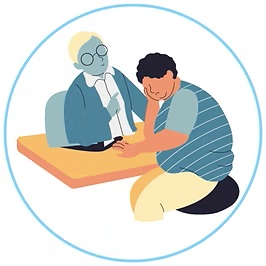
Every relationship experiences moments of disagreement, emotional distance, or uncertainty, but unresolved issues can gradually affect how partners connect. Couples therapy in Queens offers a supportive setting to examine relationship dynamics, discuss sensitive concerns, and understand each other's perspectives. Whether you're navigating recurring arguments, rebuilding after a breach of trust, or facing important decisions about your future, professional guidance can help you develop a more collaborative approach to your relationship and create meaningful changes together.



Why Queens Couples Choose Mindset Psychology for Relationship Support
Queens is a borough that demands and deserves mental health care that reflects its diversity, its complexity, and its particular set of relational pressures. At Mindset Psychology, we bring a standard of clinical depth, cultural sensitivity, and integrated care to couples therapy in Queens that is difficult to find in a single practice.
Our couples therapy in Queens is delivered by licensed therapists with specific expertise in relational work who understand the dynamics that drive couples conflict at a level that allows them to identify and address what is actually happening beneath the surface rather than working only at the level of the symptoms. They know how to hold the room for both partners simultaneously, maintaining neutrality while ensuring that both voices are heard and both people’s needs are taken seriously throughout the therapeutic process.
For couples in Queens where one or both partners are dealing with individual mental health concerns that are affecting the relationship, our anxiety therapy Queens page covers how we address anxiety that is creating relational strain. Our integrated care model ensures that individual and couples work are coordinated within the same practice rather than handled separately by providers who are not in communication. For clients dealing with depression as a significant factor in their relational difficulties, our depression therapy in Commack NY page covers how we approach depression within a broader New York care plan.
When medication support is relevant for either partner, our on-staff psychiatric providers coordinate directly with your therapist through our psychiatric medication management services. This integration ensures that the full clinical picture of each partner’s mental health informs the couple’s work rather than being managed in a completely separate silo.
For Queens couples who find it difficult to align schedules for in-person attendance, or who simply prefer the flexibility of virtual sessions, our online therapy platform delivers the same quality of couples therapy through a secure, HIPAA-compliant video format. Both partners can join from the same location or from separate spaces, and the quality and depth of the relational work are fully maintained in the virtual format. Consistent attendance is one of the most important factors in effective couples therapy, and removing the logistical barriers to that consistency is a clinical priority.
We accept major insurance plans including Aetna, United Healthcare, and Blue Cross Blue Shield, making consistent and high-quality couples therapy financially accessible for Queens residents. Getting started begins with a free 15-minute consultation, a straightforward and low-pressure conversation about where you and your partner are and what the right support looks like. Reach out to Mindset Psychology today and take the first step toward the relationship you actually want.
What Our Patients Say
About Our Practice
"Dr. Rabbani is a great therapist! Very attentive and gives practical advice to really help me focus on what's important."

A.A
"I honestly would not be where I am now without Dr. Krakauer! He is very caring and always available for his patients."
E.G
"Dr. Rabbani is extremely kind and professional I would recommend him to anybody seeking help."
E.T
Meet Our Team
Expert and Professional in Psychotherapy















Book An Appointment
Schedule your ADHD assessment at Mindset Psychology today and ask us about our free 15-minute consultation at (516) 208-2638
Schedule Your Free 15 Min
Virtual Consultation
We're here to help. Contact Mindset Psychology today to learn more about our mental health services or to schedule an appointment with one of our experienced therapists or psychologists. Take the first step towards better mental health and get in touch with us today.
Insurances
We accommodate a wide range of insurance providers. Should you have questions about your coverage, don't hesitate to reach out for further details.






Frequently Asked Questions
01How does couples therapy work when partners come from different cultural backgrounds?
Cultural differences can be one of the richest dimensions of a relationship and also one of the most significant sources of misunderstanding and conflict when those differences have not been directly explored and addressed. Effective couples therapy with culturally diverse partners begins with the therapist taking the time to understand each partner’s cultural context, family expectations, communication norms, and the values and assumptions that each person brings from their background. From that foundation, the therapeutic work helps partners understand what is driving the friction between them at a cultural level, develop respect for each other’s frameworks even where they differ, and build a shared relational culture that honors both backgrounds rather than defaulting entirely to one or the other.
02What happens in couples therapy if one partner is significantly more engaged than the other?
This is an extremely common situation, and it does not need to prevent couples therapy from being productive. A skilled therapist knows how to work with different levels of engagement and different levels of hope or skepticism within the same room. The less engaged partner’s reluctance is itself clinical material that can be explored productively, and it frequently shifts significantly once the first session demonstrates that the therapeutic space is neutral rather than a forum in which one partner’s account will be validated over the other’s. Even when engagement remains uneven, the more committed partner often makes changes that shift the dynamic between them in meaningful ways, and those shifts can themselves increase the less engaged partner’s investment in the process.
03How long does couples therapy typically take to produce noticeable results?
The timeline varies depending on the complexity of the issues being addressed, how long the relational difficulties have been present, and the level of engagement both partners bring to the process. Many couples begin to notice meaningful improvement in communication and connection within eight to twelve sessions of consistent weekly work. Couples dealing with more entrenched patterns, significant trust breaches, or longstanding emotional distance typically benefit from a longer engagement that allows for deeper relational repair. Your therapist will review progress regularly and adjust the plan as needed, with the goal always being to reach a point where the skills and understanding developed in therapy are embedded in how the couple functions rather than only applied during sessions.
04Can Mindset Psychology provide both couples therapy and individual therapy for Queens residents simultaneously?
Yes, and this integrated approach frequently produces the best outcomes when both are clinically indicated. When one or both partners are dealing with individual mental health concerns that are affecting the relationship, addressing those concerns through individual therapy alongside couples sessions tends to produce significantly better relational outcomes than couples therapy alone. At Mindset Psychology, both streams of support are coordinated within the same practice, meaning the insights and progress from individual work inform the couples work and vice versa. This makes a real difference to the pace and depth of progress for both the individual and the relationship. Reach out to discuss how we can structure the right combination of support for your specific situation.
05How do I get started with couples therapy at Mindset Psychology in Queens?
Getting started is straightforward and low-pressure. Reach out to Mindset Psychology to book a free 15-minute consultation, a real conversation where a member of our team takes the time to understand where you and your partner are and what kind of support would be most helpful. From there, we match you with a therapist whose background, clinical approach, and cultural awareness align with your relationship’s specific needs and get your first session scheduled quickly. Both partners are welcome to join the initial consultation together or separately, whichever feels more comfortable as a starting point. There is no pressure and no commitment required beyond that first honest conversation about where you are and what you are hoping to change.
Getting started is straightforward and low-pressure. Reach out to Mindset Psychology to book a free 15-minute consultation, a real conversation where a member of our team takes the time to understand what you are experiencing and what kind of support would be most helpful for where you are right now. From there, we match you with the right therapist for your specific depression presentation and get your first session scheduled quickly, typically within just a few days. There is no lengthy process, no pressure, and no expectation that you arrive with everything clearly articulated. Many people are not entirely sure how to describe what they are experiencing when they first reach out, and that is completely fine. Figuring that out together is part of what the initial assessment is for.
Address:
101 6th Ave, New York, NY 10013
10 Bond Street, Great Neck, NY 11021
CONTACT US