
Relationship Counseling in Long Island
Every relationship has seasons that test it. Moments where communication falters, distance grows, and the connection that once felt natural starts to feel like something that requires conscious effort just to maintain. At Mindset Psychology, our relationship counseling in Long Island gives individuals and couples a structured, professionally supported space to understand what is straining their relationships and rebuild something more honest, more connected, and more sustainable going forward.
What Relationship Counseling Actually Addresses and Why It Goes Beyond Conflict Resolution
When most people think about relationship counseling, they picture two people in a room arguing about the same things they argue about at home, with a therapist in the middle trying to referee. That picture is not entirely wrong as a starting point, but it misses most of what effective relationship counseling actually does.
Conflict is rarely the real problem in struggling relationships. It is a symptom. The real problems are almost always deeper and less visible. They are the unspoken needs that have never been voiced because voicing them felt too risky. They are the accumulated small moments of feeling unseen, unheard, or unimportant that gradually erode goodwill and emotional safety. They are the patterns of communication that were established early in the relationship and have become entrenched long past the point of serving anyone. They are the individual histories, wounds, and relational templates each person brings into the relationship from long before they met their partner. And they are the gap between what both people genuinely need from the relationship and what they have been asking for, often in ways that make getting it less rather than more likely.
Effective relationship counseling gets beneath the conflict to these underlying dynamics. It creates a space where both people can speak honestly about their experience without the conversation immediately becoming a battle for whose version of reality is correct. It helps each person understand not just what the other person is doing that is hurtful, but why, and what would actually address the need underneath the behavior. And it builds new patterns of communication, connection, and repair that work because they are grounded in a genuine understanding of both people rather than a set of generic conflict resolution techniques applied to a relationship they were never designed for.
At Mindset Psychology, our relationship counseling in Long Island is delivered by licensed therapists with specific training and extensive experience in relational work. We work with couples at every stage, newly together and wanting to build on a strong foundation, navigating a specific crisis or breach of trust, feeling gradually disconnected after years together, or trying to determine whether the relationship has a future worth investing in. We work with individuals whose personal patterns are affecting their relationships and who want to understand and change those patterns in individual therapy alongside or separate from couples work. And we work with families navigating the relational dynamics that arise from major life transitions, communication breakdown, and the particular pressures of Long Island family life.
The therapeutic approaches we draw on include Emotionally Focused Therapy principles, Cognitive Behavioral approaches adapted for relational dynamics, and psychodynamic therapy for clients whose relational patterns have deeper historical roots worth understanding. To understand the full range of how we support individuals and couples at Mindset Psychology, visit our individual therapy page for a complete overview of our clinical offering.
Situations Where Relationship Counseling in Long Island Can Help
Relationship counseling serves a much wider range of people and situations than most people initially assume. You do not need to be in a relationship crisis to benefit from professional support. You do not need to be on the verge of separation or dealing with infidelity. Some of the most productive relationship counseling happens when two people who genuinely care about each other recognize that something has shifted and decide to address it before it becomes something harder to repair. If any of the following feel genuinely familiar, relationship counseling in Long Island at Mindset Psychology is worth exploring seriously.
- Communication that consistently goes nowhere useful. When every attempt to discuss something important ends in defensiveness, withdrawal, escalation, or the same circular argument with no resolution, the communication pattern itself has become the primary problem. A skilled therapist helps identify why the pattern keeps repeating and builds more productive alternatives that are grounded in how both people actually communicate rather than how they think they should. Our couples therapy Long Island page covers how we work with couples specifically and what the couples therapy process looks like at Mindset Psychology.
- Emotional distance that has built so gradually it is hard to pinpoint when it started. When two people who were once genuinely close begin to function more like housemates than partners, going through the daily logistics of shared life without real emotional contact, the distance rarely happens in a single moment. It accumulated through busy seasons, unaddressed conflicts, and the quiet withdrawal of two people who stopped feeling safe enough to be fully present with each other. Counseling helps identify where the distance began and what it will take to rebuild genuine closeness.
- Recovering from infidelity or a significant breach of trust. Few relational crises are as destabilizing as the discovery of infidelity. The rupture is immediate, profound, and affects not just the relationship but both people's sense of identity and safety. Whether a couple chooses to work toward genuine repair or toward a conscious and respectful separation, relationship counseling provides the structure for doing so in a way that is honest and intentional rather than reactive and destructive.
- Disagreements about parenting, finances, or life direction that have become entrenched. When differences in fundamental values, priorities, or approaches to major life domains have solidified into positions that neither person feels able to move from, counseling helps explore what is actually at stake for each person beneath the stated position and find ways of navigating the difference that honor both people's core needs. Our life transitions page covers how we support couples navigating major life changes that create relational strain.
- Intimacy that has diminished or disappeared. When physical or emotional intimacy has reduced significantly, or when there is a meaningful mismatch in what each partner needs in this area, the silence around it tends to make the problem worse rather than better. Relationship counseling provides a structured and sensitive space to explore what has changed, what each person actually needs, and what would make genuine reconnection possible. Our sexual dysfunction page covers how we approach intimacy-related concerns as part of broader relationship counseling work.
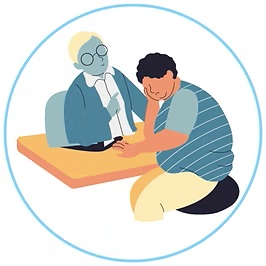
- Individual mental health concerns that are affecting the relationship. When one partner is dealing with anxiety, depression, trauma, ADHD, or another mental health concern that is significantly affecting the relationship dynamic, individual therapy alongside relationship counseling often produces better outcomes than either form of support alone. Our anxiety therapy Long Island page covers how anxiety specifically affects relational functioning and how we address both dimensions simultaneously.
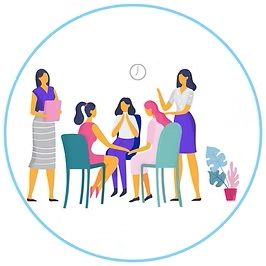
- Family conflict and parent-child relationship breakdown. Relationship counseling is not limited to romantic partnerships. When communication between parents and teenage children has broken down to the point where most interactions are painful, when blended family dynamics are creating significant stress, or when a family is navigating the aftermath of a significant loss or transition together, structured relational support can help restore something more functional and more connected.
- Preparing for a significant commitment. Premarital counseling is one of the most underutilized and most valuable forms of relationship support available. It creates a dedicated space to discuss expectations, values, conflict styles, financial approaches, family dynamics, and potential areas of friction before they become entrenched problems. Our premarital counseling NYC page covers how we approach this type of preventative relational work and what couples can expect from the process.
- Recurring conflict patterns that escalate quickly or leave lasting hurt. When arguments move from the topic at hand to personal history, character attacks, or a level of intensity that leaves both people feeling significantly worse rather than clearer, the conflict pattern itself requires clinical attention. A therapist helps identify the underlying triggers and unmet needs that drive the escalation and build more constructive responses.
- A general sense that the relationship is not what either person wants it to be without a clear understanding of why. Sometimes couples come to counseling not because things are catastrophically wrong but because something feels persistently off, a gap between the relationship they have and the relationship they want, without either person being able to clearly name what is missing or how to change it. That is a completely valid starting point for relationship counseling.
These situations are not signs of relational failure. They are signs that two people care enough about their relationship to address what is not working rather than letting it deteriorate further.
Reconnect and Grow Together
Relationship Counseling in Long Island offers a supportive space for couples and individuals who want to strengthen their connections, work through recurring concerns, and better understand one another. Counseling can help uncover patterns affecting the relationship while encouraging clearer communication, mutual understanding, and healthier ways to move forward together.


Why Long Island Residents Choose Mindset Psychology for Relationship Counseling
Long Island is home to people navigating the full complexity of modern relational life, dual-career pressures, parenting demands, extended family dynamics, financial stress, and the particular challenge of maintaining genuine connection in the middle of busy and demanding lives. Finding a relationship counselor who understands that full context, who brings genuine clinical depth to relational work, and who delivers that work within a practice that can support the full complexity of what individuals and couples are dealing with, that is a more selective search than simply finding a therapist with availability.
Our relationship counseling in Long Island is delivered by licensed therapists with specific training and experience in relational and couples work. They understand the dynamics that drive relational conflict at a level that allows them to identify what is actually happening beneath the surface of a couple’s arguments and to address it with precision rather than generic advice. They know how to hold the room for both partners simultaneously, maintaining genuine neutrality while ensuring both voices are heard, and both people’s needs are taken seriously.
For clients dealing with depression that is affecting their relationships, our depression therapy Long Island page covers how we address the intersection of depression and relational functioning as part of a coordinated care plan. For clients whose relationship counseling intersects with individual trauma histories, our EMDR therapy page covers how we integrate trauma-focused work alongside relational support for clients whose past is significantly affecting their present relational functioning.
Mindset Psychology’s integrated care model means that relationship counseling does not happen in isolation from other dimensions of a client’s care. If medication support is relevant for either partner at any point, our on-staff psychiatric providers coordinate directly with your therapist through our psychiatric medication management services. This level of integration is genuinely rare in a single practice and makes a meaningful difference to the coherence and effectiveness of the overall care experience.
For Long Island residents who find it difficult to align schedules for in-person sessions, or who simply prefer the flexibility of attending from home, our online therapy platform delivers the same quality of relationship counseling through a secure, HIPAA-compliant video format. Both partners can join from the same location or from separate spaces, whichever is most practical, and the quality and depth of the relational work is fully maintained in the virtual format.
We accept major insurance plans including Aetna, United Healthcare, and Blue Cross Blue Shield, making consistent and high-quality relationship counseling financially accessible for Long Island residents. Getting started is a free 15-minute consultation, a genuine, low-pressure conversation about where you are and what kind of support would be most helpful. Reach out to Mindset Psychology today and take the first step toward the relationship you actually want.
What Our Patients Say
About Our Practice
"Dr. Rabbani is a great therapist! Very attentive and gives practical advice to really help me focus on what's important."

A.A
"I honestly would not be where I am now without Dr. Krakauer! He is very caring and always available for his patients."
E.G
"Dr. Rabbani is extremely kind and professional I would recommend him to anybody seeking help."
E.T
Meet Our Team
Expert and Professional in Psychotherapy















Book An Appointment
Schedule your ADHD assessment at Mindset Psychology today and ask us about our free 15-minute consultation at (516) 208-2638
Schedule Your Free 15 Min
Virtual Consultation
We're here to help. Contact Mindset Psychology today to learn more about our mental health services or to schedule an appointment with one of our experienced therapists or psychologists. Take the first step towards better mental health and get in touch with us today.
Insurances
We accommodate a wide range of insurance providers. Should you have questions about your coverage, don't hesitate to reach out for further details.






Frequently Asked Questions
01What is the difference between relationship counseling and couples therapy?
In practice, relationship counseling and couples therapy refer to broadly similar professional services, both involving a licensed therapist working with one or more people to improve the quality and functioning of their relationships. The distinction is largely one of framing and historical emphasis. Relationship counseling has traditionally been associated with more practical, solution-focused support, helping people develop specific communication and conflict resolution skills. Couples therapy tends to imply a deeper engagement with the psychological dynamics between partners, including the emotional and historical patterns each person brings to the relationship. At Mindset Psychology, our approach integrates both dimensions, providing practical skill-building alongside a genuine exploration of the underlying relational dynamics, and adapts the balance depending on what each couple actually needs.
02Do both partners need to attend relationship counseling sessions together?
Not necessarily. While many relationship counseling formats involve both partners attending together, there are situations where individual sessions alongside or instead of joint sessions are more appropriate. When one partner is not ready or willing to attend, individual relationship counseling can still produce meaningful change by helping one person understand and shift their own relational patterns. When both partners attend, the structure of sessions can include joint sessions, individual sessions with each partner separately, or a combination of both, depending on what is most clinically useful at each stage of the work. Your therapist will work with you to determine the most productive format given where you and your relationship actually are.
03How long does relationship counseling typically take to produce meaningful results?
The timeline varies considerably depending on the complexity of the issues being addressed and the level of engagement both people bring to the process. Some couples notice significant improvement in communication and connection within eight to twelve sessions of consistent weekly work. Others dealing with more deeply entrenched patterns, significant trust breaches, or longstanding emotional distance benefit from a longer engagement that allows for deeper relational repair. Your therapist will regularly review progress with you and adjust the plan as needed. The goal is always to reach a point where the skills and understanding developed in counseling are embedded in how you actually function in the relationship, not just applied during sessions.
04Can Mindset Psychology support both individual and relationship counseling for Long Island residents simultaneously?
Yes, and this integrated approach is one of the genuine strengths of working with Mindset Psychology. When individual concerns such as anxiety, depression, trauma, or ADHD are contributing to relational difficulties, addressing those concerns through individual therapy alongside relationship counseling tends to produce significantly better outcomes than either form of support alone. At Mindset Psychology, both streams of support are coordinated within the same practice, meaning the insights and progress from individual work inform the relational work and vice versa. This level of coordination is genuinely rare and makes a real difference to the pace and depth of progress for both the individual and the relationship. Reach out to discuss how we can structure the right combination of support for your specific situation.
05How do I get started with relationship counseling at Mindset Psychology in Long Island?
Getting started is simple and low-pressure. Reach out to Mindset Psychology to book a free 15-minute consultation. During this call, a member of our team will take the time to understand where you and your relationship are, what you are hoping to work on, and what kind of therapeutic approach is most likely to be a good fit. From there, we match you with a therapist whose background and approach align with your relationship's specific needs and get your first session scheduled quickly. Both partners are welcome to join the consultation together or separately, whichever feels more comfortable as a starting point. There is no pressure and no commitment required beyond that first honest conversation.
CONTACT US