

EMDR Therapy for Couples
Some of the most painful dynamics in a relationship are not really about the relationship at all. They are about what each person carries into it from long before they met. At Mindset Psychology, our EMDR therapy for couples helps partners understand how unresolved trauma and painful past experiences are shaping the present dynamic between them, and creates the conditions for healing that neither individual therapy nor traditional couples work can fully reach on its own.
What EMDR Therapy for Couples Is and Why It Addresses What Traditional Couples Therapy Sometimes Cannot
EMDR, which stands for Eye Movement Desensitization and Reprocessing, is one of the most extensively researched and most consistently effective trauma treatments available in modern psychotherapy. It was originally developed for individual trauma processing, helping people reprocess distressing memories so that they lose their emotional charge and no longer dominate present-day functioning. Its application to couples work is a more recent development, and one that is producing results that many couples find genuinely transformative in ways that communication-focused couples therapy alone was not able to achieve.
The reason EMDR has become increasingly integrated into couples therapy is grounded in a straightforward but important clinical reality. Most relational conflict is not primarily about the topics being argued about. It is about the emotional charge those topics carry for each person, a charge that is almost always rooted in experiences that predate the relationship itself. When one partner reacts with disproportionate intensity to feeling criticized, it is rarely about the specific criticism delivered in the current argument. It is about all the times before, perhaps reaching back to childhood, when criticism meant rejection, inadequacy, or danger. When one partner shuts down completely during conflict, it is not indifference. It is a nervous system responding exactly as it learned to respond in a previous environment where disengagement was the safest available option.
These responses are not rational choices. They are automatic, deeply embedded reactions driven by implicit memory and nervous system conditioning. No amount of communication skills training changes them at their root because the root is not a communication deficit. It is an unprocessed experience that continues to operate beneath the surface of the relationship, generating emotional reactions that feel present-tense but are actually historical.
EMDR for couples works by bringing this layer of experience into the therapeutic space. Through the structured EMDR process, each partner has the opportunity to process the specific experiences and memories that are most significantly driving their relational triggers. As those memories are processed and their emotional charge is reduced, the automatic reactions they were generating in the relationship begin to lose their intensity. Partners find that they are able to remain more present with each other during conflict rather than disappearing into the automatic responses their nervous systems have been producing. The relationship, in other words, gets a chance to operate in the present rather than being perpetually filtered through each person’s unprocessed past.
At Mindset Psychology, our EMDR therapy for couples is delivered by licensed therapists with specific training in both the EMDR protocol and its application to relational and couples work. This is not standard EMDR simply delivered in the presence of both partners. It is a clinically adapted integration of EMDR principles and couples therapy that requires specific expertise in both domains. Sessions are structured carefully to ensure that both partners feel safe, that the processing work is appropriately paced, and that the relational dimension of the work is actively maintained throughout. To understand how EMDR for couples fits within the broader range of relational support we offer, visit our couples therapy Long Island page for a full picture of how Mindset Psychology supports couples at every stage.
When EMDR Therapy for Couples Is the Right Clinical Choice
EMDR therapy for couples is not the right approach for every couple in every situation. It is specifically indicated when unprocessed trauma or difficult past experiences are playing a significant and identifiable role in the patterns driving relational distress. EMDR therapy for couples at Mindset Psychology is particularly well suited for the following situations.
- One or both partners have a trauma history that is visibly affecting the relationship. When a partner's trauma responses, hypervigilance, emotional shutdown, difficulty trusting, or intense reactivity to specific situations are consistently creating strain in the relationship, individual EMDR processing done within a couples framework can reduce the intensity of those responses and create more space for genuine connection. Our EMDR therapy New York page covers how we approach EMDR treatment across our practice and what clients can expect from the process.
- Relational triggers that seem disproportionate and are resistant to communication-based intervention. When a couple has already worked on their communication, has the skills, and understands intellectually what is happening during conflict but still finds themselves in the same painful patterns, the issue is almost certainly operating at a level beneath cognitive and behavioral intervention. EMDR addresses that level directly.
- Recovery from infidelity and the trauma of betrayal. The discovery of infidelity creates what many trauma researchers now describe as a genuine traumatic experience for the betrayed partner, and sometimes for both partners in different ways. Standard couples therapy is valuable in this context but does not always address the full traumatic impact of the betrayal. EMDR can help process the intrusive memories, hypervigilance, and emotional flooding that characterize betrayal trauma and create the neurological conditions for genuine repair. Our relationship issues page covers the full range of relational concerns we support at Mindset Psychology.
- Attachment wounds from childhood that are playing out in the adult relationship. When early experiences of abandonment, neglect, emotional unavailability, or inconsistent caregiving have created attachment patterns that are driving relational behavior in ways neither partner fully understands, EMDR provides a pathway to processing those foundational experiences and loosening their grip on present-day relating. Our psychodynamic therapy page covers how we address attachment and historical patterns through deeper exploratory work alongside or in combination with EMDR.
- Conflict patterns that escalate rapidly into emotional flooding for one or both partners. When conflict regularly reaches a level of emotional intensity that makes productive communication impossible, and when one or both partners frequently experience what researchers call emotional flooding, a state where the nervous system is so activated that higher-order thinking becomes temporarily unavailable, EMDR can process the underlying material driving that level of activation and significantly reduce its frequency and intensity.
- A partner dealing with PTSD whose symptoms are directly affecting the relationship. When one partner is living with PTSD and its symptoms- hypervigilance, avoidance, emotional numbing, and intrusive re-experiencing, are creating significant strain in the relationship, EMDR for couples integrates trauma treatment with relational support in a way that addresses both dimensions simultaneously. Our PTSD treatment NYC page covers how we approach PTSD treatment and how that work intersects with couples therapy.
- Couples where both partners carry significant trauma and the interactions between their trauma responses create a particularly complex relational dynamic. When both partners have significant trauma histories, the interaction between their respective nervous system responses can create dynamics that are genuinely difficult to address through communication-focused couples therapy alone. EMDR for couples provides a framework for addressing both partners' trauma material in a coordinated way that takes the relational dynamic into account.
- Repetitive arguments that seem to be about the content but are clearly driven by something deeper. When the same argument keeps returning with the same emotional intensity regardless of how many times it is processed in standard couples therapy, the recurring pattern is a strong signal that the emotional charge driving it is rooted in something that has not yet been directly addressed.
- Grief and loss that one or both partners are carrying and that is affecting their capacity for connection. When unprocessed grief, whether from a recent loss or from losses that go back much further, is creating emotional unavailability, shutdown, or reactivity in the relationship, EMDR provides a structured pathway for processing that grief in a way that restores emotional presence. Our cognitive behavioral therapy for grief and loss page covers additional therapeutic approaches we draw on for grief-related concerns alongside EMDR.
If several of these situations resonate with where you and your partner currently are, EMDR for couples is likely to be a clinically meaningful part of the right treatment plan.
Heal Past Hurts and Strengthen Your Bond
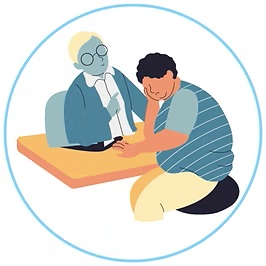
EMDR Therapy for Couples can help partners explore how painful experiences, unresolved memories, and emotional triggers may be affecting their relationship today. By addressing deeper sources of distress, couples can work toward reducing reactive patterns, understanding each other’s experiences, and creating a more secure emotional connection.



Why Couples Choose Mindset Psychology for EMDR Therapy
EMDR therapy for couples requires a specific and relatively rare combination of clinical expertise. The therapist needs to be genuinely trained in the EMDR protocol at a level that allows them to use it with confidence and precision. They also need to be skilled in couples therapy and understand how to maintain the relational dimension of the work while one or both partners are engaged in individual trauma processing. They also need to know how to manage the particular clinical complexities that arise when both partners are in the room, and both may have significant trauma responses that can be triggered by the work itself. At Mindset Psychology, our therapists bring all three dimensions of that expertise.
Our EMDR therapy for couples does not happen in a clinical silo. It is delivered within Mindset Psychology’s fully integrated care model, which means that EMDR for couples can be coordinated with individual therapy for either partner, with psychiatric support through our psychiatric medication management services when medication is clinically relevant, and with other therapeutic approaches that may be part of either partner’s individual care. This coordination is managed within the same practice rather than across separate providers who are not in communication, which produces a significantly more coherent and effective overall care experience.
For couples where the EMDR work surfaces concerns that benefit from deeper individual exploration, our individual therapy services are available for either partner within the same practice. For couples who want to complement EMDR processing with structured skill-building around emotional regulation and interpersonal effectiveness, our dialectical behavior therapy Long Island page covers how DBT skills can be integrated alongside trauma-focused relational work.
For couples who prefer the flexibility of attending sessions virtually, our online therapy platform delivers EMDR for couples through a secure, HIPAA-compliant video format. EMDR has been validated for telehealth delivery, and our therapists are experienced in facilitating the full EMDR protocol effectively through virtual sessions. Many couples find that the comfort and familiarity of their own environment actually supports the safety and openness that effective EMDR work requires.
We accept major insurance plans including Aetna, United Healthcare, and Blue Cross Blue Shield, making specialist EMDR therapy for couples financially accessible for residents across New York and beyond. Getting started begins with a free 15-minute consultation, a genuine and unhurried conversation about where you and your partner are and whether EMDR for couples is the right fit for what you are dealing with. Reach out to Mindset Psychology today and take the first step toward a relationship that is no longer held hostage by the past.
What Our Patients Say
About Our Practice
"Dr. Rabbani is a great therapist! Very attentive and gives practical advice to really help me focus on what's important."

A.A
"I honestly would not be where I am now without Dr. Krakauer! He is very caring and always available for his patients."
E.G
"Dr. Rabbani is extremely kind and professional I would recommend him to anybody seeking help."
E.T
Meet Our Team
Expert and Professional in Psychotherapy















Book An Appointment
Schedule your ADHD assessment at Mindset Psychology today and ask us about our free 15-minute consultation at (516) 208-2638
Schedule Your Free 15 Min
Virtual Consultation
We're here to help. Contact Mindset Psychology today to learn more about our mental health services or to schedule an appointment with one of our experienced therapists or psychologists. Take the first step towards better mental health and get in touch with us today.
Insurances
We accommodate a wide range of insurance providers. Should you have questions about your coverage, don't hesitate to reach out for further details.






Frequently Asked Questions
01How is EMDR therapy for couples different from standard EMDR for individuals?
Standard EMDR for individuals is a structured protocol in which one person processes distressing memories and experiences in the presence of a therapist, using bilateral stimulation to support the brain's natural processing of traumatic material. EMDR for couples adapts this protocol to a relational context, which adds significant clinical complexity. The therapist must manage the emotional experience of both partners simultaneously, ensure that the processing work of one partner does not overwhelm or destabilize the other, and maintain an active focus on how the individual trauma processing is affecting and improving the relational dynamic between them. This requires specific training in the couples application of EMDR rather than simply applying the standard individual protocol in the presence of both partners.
02Do both partners need to have trauma histories for EMDR therapy for couples to be helpful?
No. EMDR therapy for couples can be clinically appropriate even when only one partner has a significant trauma history that is visibly affecting the relationship. In that situation, the EMDR processing work may focus primarily on one partner's material while the other partner is present in a supportive capacity and is actively helped to understand how that trauma has been affecting their partner and their dynamic. When both partners have trauma histories, the work is more complex and requires careful coordination, but it is also often particularly transformative because it allows both people to process the material that has been most significantly shaping their interactions with each other.
03Can EMDR therapy for couples be combined with other forms of relationship counseling?
Yes, and in most cases it is. EMDR for couples works best when it is part of a broader therapeutic framework rather than the only approach being used. Most couples who undertake EMDR for couples also engage in some form of structured couples therapy that addresses communication, conflict patterns, and relational skill-building alongside the trauma processing work. The EMDR addresses the underlying emotional charge that drives relational reactivity, while the couples therapy component builds the skills and understanding that allow partners to engage with each other more effectively once that charge has been reduced. The two approaches are complementary and together produce better outcomes than either alone.
04How does Mindset Psychology ensure both partners feel safe during EMDR therapy for couples?
Safety is the foundational clinical priority in EMDR therapy for couples at Mindset Psychology. Before any trauma processing begins, your therapist will spend significant time establishing relational safety, individual resourcing, and shared understanding necessary for the work to proceed productively rather than re-traumatizingly. This includes a thorough assessment of each partner's trauma history and current stability, the development of specific stabilization and grounding resources for both partners, clear agreements about how the sessions will be structured and what each partner can expect, and an explicit focus on maintaining the relational connection between partners throughout the processing work. Your therapist will move the process forward only at a pace that both partners can genuinely sustain, and will adjust that pace responsively based on what is happening in each session.
05How do I get started with EMDR therapy for couples at Mindset Psychology
Getting started begins with a free 15-minute consultation where a member of our team takes the time to understand what you and your partner are dealing with, whether EMDR for couples is likely to be clinically appropriate for your situation, and what the right structure of support looks like. From there, we match you with a therapist who has specific training in both EMDR and couples work, and get your first session scheduled quickly. Both partners are welcome to join the initial consultation together or separately, whichever feels more comfortable. There is no pressure and no commitment required beyond that first honest conversation about where you are and what you are hoping to change. Reach out to Mindset Psychology today to take that first step.
CONTACT US