

PTSD Treatment in NYC
PTSD is not a sign of weakness; it is what happens when a human nervous system is pushed beyond what it was built to absorb alone. At Mindset Psychology, our PTSD treatment in NYC is built around one core belief: that what trauma did to your life does not have to be permanent, and that with the right clinical support, genuine recovery is not just possible but achievable.
Understanding PTSD, What It Actually Is and Why It Requires Specialized Treatment
Post-Traumatic Stress Disorder is one of the most misunderstood mental health conditions in common conversation. The public image of PTSD tends to be narrow: a combat veteran experiencing flashbacks, someone visibly shattered by a dramatic single event. The clinical reality is considerably broader and considerably more nuanced than that picture suggests.
PTSD can develop in response to a single traumatic event, an accident, an assault, a sudden loss, or a medical emergency. It can also develop gradually, in response to repeated or prolonged exposure to threatening, harmful, or deeply distressing experiences, which clinicians sometimes refer to as complex PTSD or C-PTSD. It can emerge immediately after a traumatic experience or lie dormant for months or years before something triggers its full emergence. And it can look dramatically different from one person to the next, presenting hypervigilance and reactivity in one person, emotional numbness and disconnection in another, and a pervasive sense of unsafety and distorted self-perception in a third.
What all presentations of PTSD share is a nervous system that has been fundamentally altered by traumatic experience, one that remains stuck, to varying degrees, in a state of threat response long after the actual threat has passed. This is not a character flaw, a weakness, or a failure to move on. It is a physiological reality: the brain and body respond to trauma in ways that made sense at the time but that have become the source of ongoing suffering in the present.
This is precisely why PTSD requires specialized treatment rather than general supportive therapy. General talk therapy, while valuable for many concerns, does not reach the neurological level at which trauma operates. PTSD treatment needs to address not just the narrative of what happened but the way the body and nervous system are continuing to respond to that narrative as if the threat were still present. It needs to reduce the power of traumatic memories, address the avoidance and hyperarousal that maintain PTSD symptoms, and rebuild a sense of safety and agency that trauma systematically dismantles.
At Mindset Psychology, our PTSD treatment in NYC draws on the approaches with the strongest evidence base for trauma, including EMDR therapy, trauma-focused Cognitive Behavioral Therapy, and Acceptance and Commitment Therapy, delivered by licensed clinical psychologists and therapists with specific training and extensive experience in trauma work. Treatment begins with a thorough assessment designed to understand the full picture of your trauma history, your current symptom presentation, and the specific goals you are working toward. From that foundation, your therapist builds a treatment plan that is genuinely tailored to your experience, not a standard trauma protocol applied uniformly. To understand how PTSD treatment sits within our broader clinical offering, visit our individual therapy page.
Signs That You May Benefit From PTSD Treatment in NYC
PTSD is frequently underdiagnosed, not because people aren't suffering, but because the connection between current symptoms and past trauma is not always obvious, even to the person experiencing it. Many people carry significant PTSD symptoms for years without recognizing that what they are experiencing has a name, a clear clinical picture, and a well-established path of treatment. If several of the following feel genuinely familiar, PTSD treatment in NYC at Mindset Psychology deserves serious consideration.
- Intrusive memories, flashbacks, or distressing dreams that pull you back to what happened. When traumatic memories arrive uninvited — vivid mental images, physical sensations, or dreams that feel indistinguishable from reality —they are not simply a sign that you haven't moved on. They are a core symptom of PTSD that responds directly and specifically to trauma-focused treatment.
- Avoiding anything that reminds you of the traumatic experience. Avoidance is one of PTSD's most powerful and most life-limiting symptoms. When the effort to stay away from reminders, people, places, conversations, media, and physical sensations begins to shape the structure of your daily life, PTSD has taken on a size that warrants professional attention.
- A persistent state of hypervigilance and being constantly on alert. When your nervous system is stuck in a state of high alert, scanning for danger, startling easily, and unable to relax even in objectively safe situations, the physiological cost of that constant activation is significant and cumulative. Our anxiety therapy NYC page covers how we address the anxiety dimension of PTSD alongside the trauma-specific work.
- Emotional numbness is a persistent feeling of being cut off from your own life. When trauma leads to a shutting down of emotional experience, feeling detached from people you love, being unable to feel positive emotions, and going through the motions of life without genuine engagement, this dissociative response is as much a PTSD symptom as hyperarousal, and as much in need of targeted clinical attention.
- Significant negative shifts in how you see yourself or the world since the traumatic experience. PTSD frequently produces deep changes in core beliefs, a persistent sense of shame or self-blame, a conviction that the world is fundamentally unsafe, and a belief that you are permanently damaged or that meaningful connection is no longer possible for you. These cognitive changes are a direct target of trauma-focused therapy.
- Difficulties in relationships that have developed or worsened since the trauma. When PTSD is affecting your ability to trust, to feel close to others, to regulate your emotional reactions in relationships, or to engage in intimacy without being triggered, the relational impact of trauma needs to be addressed alongside the symptom-focused work. Our relationship issues page covers how we support the relational dimensions of trauma recovery.
- Sleep that has been fundamentally disrupted by nightmares or hyperarousal. Chronic sleep disruption, whether through recurrent nightmares, difficulty falling asleep due to hypervigilance, or waking in a state of alarm, is both a symptom of PTSD and a factor that significantly worsens its other manifestations. Addressing sleep is often an early and important focus of PTSD treatment.
- Emotional reactions that feel disproportionate or impossible to control. Intense anger, sudden floods of grief, overwhelming shame, or emotional reactions that seem to arrive from nowhere and feel impossible to manage are all common features of PTSD, particularly when they are triggered by something that appears unrelated to the original trauma.
- Using substances, overworking, or other behaviors to manage the internal experience of PTSD. When the primary strategy for coping with PTSD symptoms has become numbing, through alcohol, substances, work, screens, or other forms of avoidance, the underlying trauma has not been addressed, only temporarily quieted.
- A sense that you have become a fundamentally different person since the traumatic experience. When people who knew you before the trauma recognize a change, or when you yourself feel that the person you were before is somehow out of reach, this profound shift in identity is one of PTSD's most painful dimensions, and one that trauma-focused therapy directly addresses.
You do not need to check every box. If trauma has meaningfully altered how you feel, how you function, or how you experience yourself and the world, treatment is appropriate and warranted.
Reclaim a Greater Sense of Safety and Control
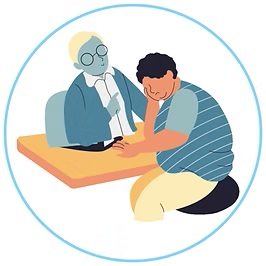
PTSD Treatment in NYC offers compassionate support for individuals working through the effects of traumatic experiences. Treatment can help you understand trauma responses, process difficult emotions at a manageable pace, and develop practical skills for feeling more grounded and secure in everyday life.



Why NYC Residents Trust Mindset Psychology for PTSD Treatment
PTSD treatment requires a specific kind of clinical expertise that goes well beyond general therapy training. The approaches that work for anxiety or depression, while sometimes overlapping with trauma work, are not sufficient on their own for PTSD. Effective PTSD treatment requires therapists who deeply understand the neurobiology of trauma, who are trained in the specific modalities that have been shown to work, and who know how to pace treatment in a way that is genuinely therapeutic rather than retraumatizing. Mindset Psychology’s trauma team is built to that standard.
Our PTSD treatment in NYC is delivered by licensed clinical psychologists and therapists with specific, advanced training in trauma-focused approaches. We use EMDR therapy, one of the most extensively researched and most effective treatments for PTSD, alongside trauma-focused CBT, ACT-based approaches for trauma, and mindfulness-based therapy to support nervous system regulation and present-moment grounding. The approach used with each client is determined by the nature of their trauma, their current symptom presentation, and their readiness and capacity to engage with different aspects of the treatment, not by a fixed protocol applied uniformly.
We also recognize that PTSD rarely exists in complete isolation. Many of our trauma clients are also dealing with depression, anxiety, sleep difficulties, substance use, or significant relational difficulties alongside their PTSD. At Mindset Psychology, all of these intersecting concerns can be addressed within the same integrated care team. If medication support is clinically appropriate, or for sleep, mood stabilization, or to reduce the intensity of hyperarousal symptoms enough to make trauma processing more accessible, our on-staff psychiatric providers manage that through our psychiatric medication management services in direct coordination with your therapist. This integration is essential for complex presentations and is genuinely rare to find within a single practice.
For clients whose PTSD makes the prospect of attending in-person sessions difficult, whether due to agoraphobia, hypervigilance in public spaces, or simply the practical barriers of New York City life, our online therapy platform delivers the same depth of trauma-focused care through a secure, HIPAA-compliant virtual format. EMDR and other trauma-focused approaches can be delivered effectively through telehealth, and many trauma clients find that the familiarity and safety of their own environment actually support therapeutic work rather than limiting it.
We accept major insurance plans including Aetna, United Healthcare, and Blue Cross Blue Shield, making consistent, specialized PTSD treatment financially accessible for New York City residents. Getting started begins with a free 15-minute consultation, a genuine, unhurried conversation about your experience and what you are looking for, with no commitment required.
Trauma changes things. But it does not have to be the final word on who you are or how your life unfolds. Mindset Psychology is here to help you write the next chapter. Reach out today to book your free consultation and take the first step toward genuine recovery.
What Our Patients Say
About Our Practice
"Dr. Rabbani is a great therapist! Very attentive and gives practical advice to really help me focus on what's important."

A.A
"I honestly would not be where I am now without Dr. Krakauer! He is very caring and always available for his patients."
E.G
"Dr. Rabbani is extremely kind and professional I would recommend him to anybody seeking help."
E.T
Meet Our Team
Expert and Professional in Psychotherapy












Book An Appointment
Schedule your ADHD assessment at Mindset Psychology today and ask us about our free 15-minute consultation at (516) 208-2638
Schedule Your Free 15 Min
Virtual Consultation
We're here to help. Contact Mindset Psychology today to learn more about our mental health services or to schedule an appointment with one of our experienced therapists or psychologists. Take the first step towards better mental health and get in touch with us today.
Insurances
We accommodate a wide range of insurance providers. Should you have questions about your coverage, don't hesitate to reach out for further details.






Frequently Asked Questions
01What is the difference between trauma and PTSD?
Trauma refers to an experience or series of experiences that is deeply distressing or threatening, and that overwhelms a person's ability to cope. PTSD is a specific clinical condition that can develop following a traumatic experience, characterized by a defined set of symptoms including intrusive re-experiencing, avoidance, negative changes in thinking and mood, and alterations in arousal and reactivity that persist beyond the immediate aftermath of the trauma and significantly affect daily functioning. Not everyone who experiences trauma develops PTSD; the response depends on many factors, including the nature and duration of the trauma, available support, prior history, and individual neurobiological differences. But for those who do develop PTSD, professional treatment is essential because the condition does not reliably resolve on its own without targeted intervention.
02How long does PTSD treatment typically take?
The duration of PTSD treatment varies considerably depending on the nature and complexity of the trauma, the severity of current symptoms, whether the PTSD is single-incident or complex and developmental, and how consistently the person can engage with the treatment process. For single-incident PTSD treated with a focused approach like EMDR, meaningful symptom reduction is often achieved within twelve to twenty sessions of consistent weekly work. Complex or developmental PTSD, particularly when it involves early childhood trauma, prolonged abuse, or multiple traumatic experiences, typically requires a longer treatment engagement, as the work involves not just processing specific memories but rebuilding a sense of self and safety that trauma has fundamentally disrupted. Your therapist will discuss realistic expectations with you early in the process and review progress regularly throughout.
03Is EMDR the best treatment for PTSD, and is it the only option?
EMDR is one of the most extensively researched and most consistently effective treatments for PTSD, with a strong evidence base accumulated over several decades and recognition as a recommended treatment from major health organizations, including the World Health Organization. However, it is not the only effective option. Trauma-focused Cognitive Behavioral Therapy has an equally strong evidence base and is particularly effective for PTSD that involves significant cognitive distortions, deep-seated beliefs about self-blame, shame, or the fundamental unsafety of the world. ACT-based approaches are particularly helpful for PTSD involving significant avoidance and experiential disconnection. For many clients, a combination of approaches produces the best results. The right treatment is always determined by the individual's specific trauma history, current presentation, and therapeutic preferences rather than a universal recommendation.
04Does Mindset Psychology offer PTSD treatment alongside support for depression and anxiety in NYC?
Yes, and this integrated approach is frequently necessary for effective PTSD treatment. PTSD rarely presents in isolation. Depression, generalized anxiety, panic disorder, sleep difficulties, and relationship difficulties commonly co-occur with PTSD, each one affecting and being affected by the trauma symptoms. At Mindset Psychology, our integrated care team can address all of these concerns within the same practice, with your therapist and any other providers involved in your care communicating directly to ensure everything is coordinated and working in the same direction. This eliminates the fragmentation that occurs when clients see multiple separate providers who don't communicate and produces more coherent, more effective care overall. Reach out through our contact page to discuss how we can structure the right combination of support for your specific presentation.
05How do I take the first step toward PTSD treatment at Mindset Psychology in NYC?
Taking the first step is often the hardest part, and we want to make it as straightforward as possible. Reach out to Mindset Psychology through our contact page to book a free 15-minute consultation. This is a genuine, low-pressure conversation, not a clinical intake, where a member of our team takes the time to understand what you have been through, what you are currently experiencing, and what kind of support would be most helpful. From there, we match you with a trauma-specialized therapist whose background and approach align with your specific needs and get your first session scheduled quickly. You do not need to have everything articulated or understood before you reach out. Trauma is complex, and many people are not entirely sure what they are dealing with when they first get in touch. That is completely fine; figuring that out together is part of what the first few sessions are for. Our online therapy page has more details on virtual PTSD treatment options if you would prefer to begin with telehealth sessions.
CONTACT US